
Introduction
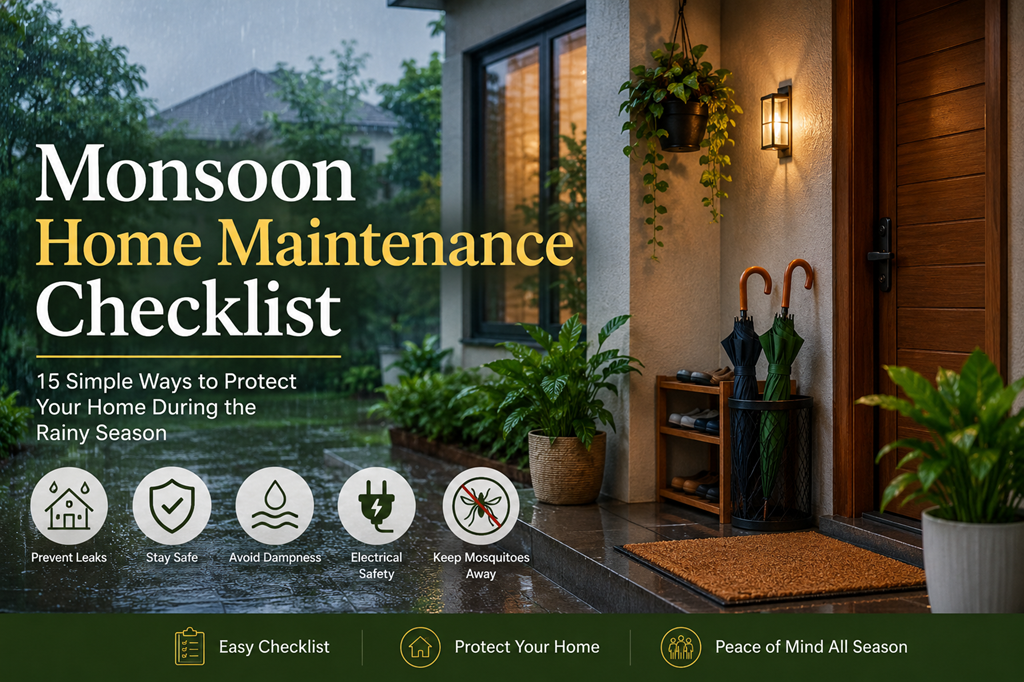
The arrival of the monsoon brings welcome relief from the scorching summer heat, but it also introduces a new set of challenges for homeowners. Heavy rainfall, high humidity, and sudden storms can affect every part of your home—from the roof and walls to electrical appliances and wooden furniture.
A small roof leak today can turn into a costly ceiling repair next month. Damp corners can encourage mould growth, while clogged drains may cause waterlogging around your home. Fortunately, most of these problems can be prevented with a little preparation.
This practical monsoon home maintenance checklist is designed for Indian homes of all sizes, whether you live in an apartment, an independent house, or a rented flat. The tips are simple, budget-friendly, and easy to follow, helping you protect your home, reduce repair costs, and enjoy the rainy season with peace of mind.
Instead of waiting for problems to appear, let’s prepare your home before they become expensive repairs.
Why Monsoon Home Maintenance Matters?
Many homeowners only notice problems after heavy rain begins. By then, damp walls, leaking roofs, slippery floors, or electrical issues may already require repairs.
Regular seasonal maintenance offers several benefits:
- Protects your home’s structure from water damage.
- Reduces the risk of mould and mildew.
- Helps electrical appliances stay safe during storms.
- Keeps indoor air healthier by preventing excessive dampness.
- Saves money by avoiding major repairs later.
Think of monsoon maintenance as a seasonal health check-up for your home. Spending a little time now can help you avoid much bigger problems in the weeks ahead.
✔ Quick Monsoon Home Inspection Checklist
Before diving into the detailed tips, take a few minutes to inspect these areas:
- Roof and terrace
- Windows and door seals
- Balcony drains
- Bathroom exhaust fans
- Kitchen sink drainage
- Electrical sockets exposed to moisture
- Wooden furniture near windows
- Water tanks and pipelines
- Outdoor lighting
- Garden drainage
If you notice any issues, address them early before the next heavy spell of rain.
💡 Essentique Tip
Don’t wait for a leak to become visible inside your home. After the first heavy rainfall, inspect your roof, balcony, and window edges carefully. Small signs of moisture are much easier and less expensive to fix than long-term water damage.

1. Inspect Your Roof and Terrace for Leaks
Your roof is your home’s first line of defence against heavy rain. Even a tiny crack or damaged waterproof layer can allow rainwater to seep inside, leading to damp ceilings, peeling paint, mould growth, and costly repairs.
Before the rainy season reaches its peak, inspect your roof or terrace carefully. Look for visible cracks, loose tiles, blocked drainage outlets, or areas where water tends to collect after rainfall.
If your home has waterproof coating, check whether it is peeling or damaged. Repairing a small crack today is much easier—and far less expensive—than replacing a damaged ceiling later.
✔ Quick Checklist
- Check for visible cracks.
- Remove leaves and debris.
- Ensure rainwater drains freely.
- Repair damaged waterproof coating.
- Inspect after the first heavy rainfall.
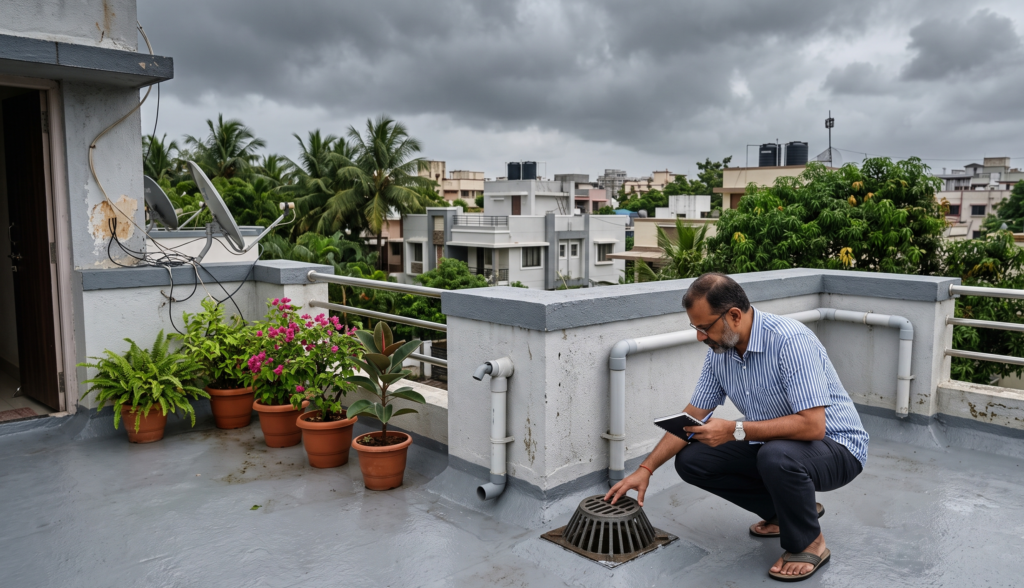
💡 Essentique Tip: If you can’t safely access your roof, use binoculars from the ground or hire a local professional for a quick inspection. Never climb onto a wet roof.
2. Seal Windows and Doors to Keep Rainwater Out
Strong winds can push rainwater through tiny gaps around windows and doors. Over time, this moisture can damage walls, wooden frames, curtains, and flooring.
Walk around your home during or after the first rain and look for signs of water seepage. If you notice damp patches or small leaks, sealing the gaps with weatherproof silicone sealant can help prevent further damage.
Also check whether window tracks are clogged with dust or leaves, as blocked drainage channels can cause water to collect and overflow indoors.
✔ Quick Checklist
- Check window seals.
- Inspect door frames.
- Clean sliding window tracks.
- Replace damaged rubber beading if necessary.
- Test windows after heavy rain.
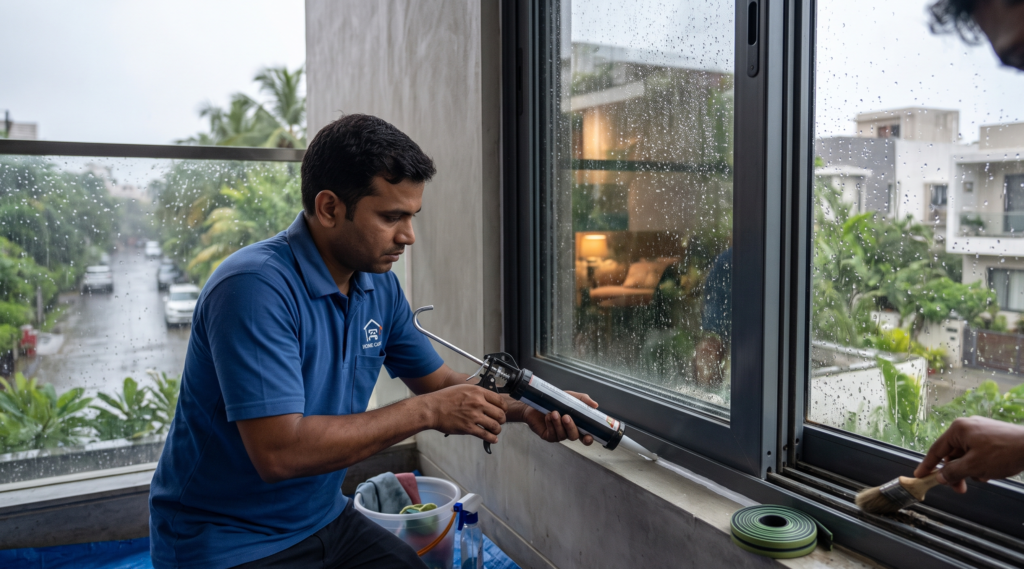
💡 Essentique Tip: If sunlight enters directly through your windows during the day, good-quality weather seals also help improve insulation throughout the year.
3. Clean Gutters and Drainage Areas
Blocked gutters and drains are one of the most common causes of water damage during the monsoon. Leaves, dust, plastic waste, and small branches can stop rainwater from flowing away properly.
When water has nowhere to go, it often overflows onto walls, balconies, or terraces, increasing the risk of seepage and structural damage.
If your home has rooftop gutters, clean them thoroughly before the rainy season. Apartment owners should also check balcony drains regularly to ensure water drains away quickly.
✔ Quick Checklist
- Remove leaves and dirt.
- Flush drains with water.
- Check for standing water.
- Clear balcony drain covers.
- Inspect after every major storm.
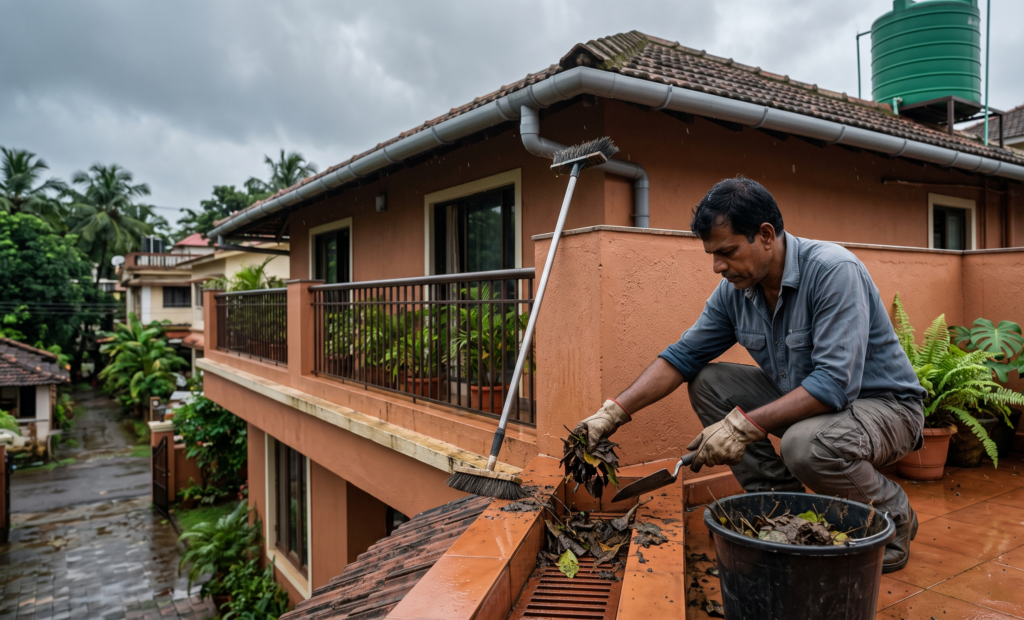
💡 Essentique Tip: During peak monsoon, spend five minutes checking outdoor drains after every heavy rainfall. It can prevent waterlogging around your home.
4. Prevent Damp Walls and Mould Growth
High humidity is one of the biggest challenges during the rainy season. Damp walls not only spoil your home’s appearance but can also create an unhealthy indoor environment by encouraging mould and mildew.
Pay close attention to corners, wardrobes, and walls behind large furniture, as these areas often receive less airflow.
Keeping windows open whenever the weather allows, using exhaust fans in kitchens and bathrooms, and allowing sunlight into rooms whenever possible can all help reduce indoor moisture.
If you notice black spots or a musty smell, clean the affected area promptly and identify the source of moisture instead of simply repainting the wall.
✔ Quick Checklist
- Check corners and wardrobes.
- Improve ventilation.
- Move furniture slightly away from walls.
- Clean mould immediately.
- Fix water seepage instead of covering it.

💡 Essentique Tip: Leaving a small gap between furniture and the wall allows air to circulate and helps reduce moisture build-up.
5. Protect Wooden Furniture from Moisture
Wood naturally absorbs moisture from the air, which can cause swelling, warping, unpleasant odours, or fungal growth during prolonged humid weather.
Avoid placing wooden furniture directly against damp walls. If possible, leave a small gap to improve airflow.
Regular dusting and occasional polishing can help maintain the finish, while keeping wardrobes and cabinets slightly ventilated prevents trapped moisture.
If you store important documents inside wooden cabinets, consider using moisture absorber packets to reduce humidity.
✔ Quick Checklist
- Keep furniture away from damp walls.
- Use moisture absorbers where needed.
- Wipe surfaces regularly.
- Improve room ventilation.
- Inspect cabinets weekly during heavy rains.

💡 Essentique Tip: If you notice a musty smell when opening a wardrobe, leave the doors open for a few hours on a dry day to improve air circulation.
6. Improve Indoor Ventilation to Reduce Humidity
Monsoon weather often keeps windows closed for long periods, causing humidity to build up inside the house. Poor ventilation can make rooms feel stuffy and encourage mould, unpleasant odours, and even damage to furniture.
Whenever the rain stops, open your windows for a while to let fresh air circulate. Cross-ventilation—where air flows in through one window and out through another—is one of the simplest ways to reduce indoor moisture.
Bathrooms and kitchens should receive special attention, as these areas naturally produce more humidity. Running an exhaust fan after cooking or showering helps remove excess moisture before it settles on walls and ceilings.
✔ Quick Checklist
- Open windows when weather permits.
- Use exhaust fans regularly.
- Avoid drying wet clothes in closed rooms.
- Keep wardrobes slightly ventilated.
- Rearrange furniture occasionally to improve airflow.

💡 Essentique Tip: Even 20–30 minutes of fresh air each day can make your home feel noticeably fresher during the rainy season.
7. Keep Bathrooms Dry and Hygienic
Bathrooms remain damp for longer during the monsoon, making them an ideal environment for mould, mildew, and slippery surfaces.
After every shower, use a floor wiper or squeegee to remove standing water. Keeping the exhaust fan running for a few extra minutes also helps reduce humidity.
Pay attention to grout lines between tiles, as these are common places where mould begins to grow. Cleaning them regularly with a suitable bathroom cleaner helps maintain hygiene and appearance.
✔ Quick Checklist
- Remove standing water daily.
- Keep the exhaust fan running.
- Clean tile grout regularly.
- Wash bath mats frequently.
- Check for plumbing leaks.

💡 Essentique Tip: Replace damp bath mats with dry ones whenever possible. Wet mats can develop odours and become breeding grounds for bacteria.
Helpful Recommendation: If your bathroom stays damp throughout the day, a quick-drying microfiber bath mat can improve safety and dry much faster than traditional cotton mats.
8. Protect Electrical Appliances During Heavy Rain
Power fluctuations are more common during thunderstorms and heavy rainfall. Sensitive electronics such as televisions, computers, routers, refrigerators, and kitchen appliances can be affected by sudden voltage changes.
Using a high-quality surge protector adds an extra layer of protection for valuable devices. If lightning is particularly severe in your area, unplugging non-essential electronics is still one of the safest precautions.
Also check extension boards for signs of moisture, especially if they are placed near balconies, windows, or floors where water may enter.
✔ Quick Checklist
- Inspect power cords.
- Keep extension boards dry.
- Use surge protectors.
- Unplug non-essential devices during severe storms.
- Avoid overloading electrical sockets.

💡 Essentique Tip: Water and electricity are a dangerous combination. Never handle plugs or switches with wet hands, even for a quick adjustment.
Helpful Recommendation: A certified surge protector with overload protection is a worthwhile investment if you frequently experience power cuts or thunderstorms during the monsoon.
9. Prevent Mosquito Breeding Around Your Home
The rainy season creates perfect conditions for mosquitoes to breed. Even a small amount of stagnant water in plant pots, buckets, trays, or clogged drains can become a breeding ground within days.
Walk around your home every week and empty containers that collect rainwater. Balcony trays, flower pots, old tyres, and unused buckets are common places where water accumulates.
Keeping your surroundings clean is one of the simplest and most effective ways to reduce mosquito populations.
✔ Quick Checklist
- Empty stagnant water weekly.
- Clean balcony drains.
- Cover water storage containers.
- Trim overgrown plants.
- Use window screens if needed.
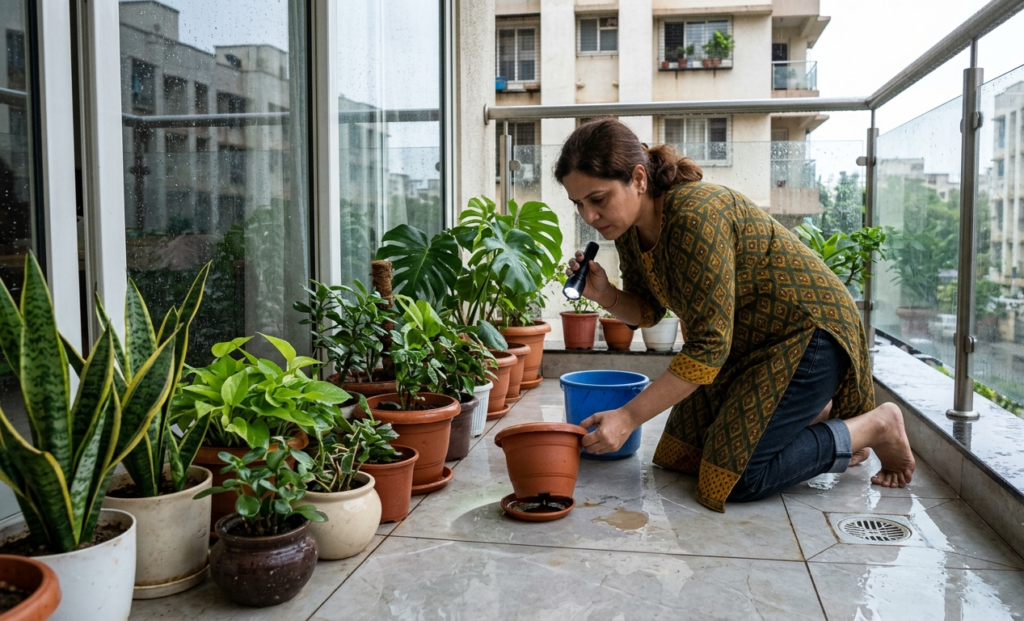
💡 Essentique Tip: Don’t forget refrigerator drip trays and AC outdoor units. These small areas are often overlooked but can collect standing water.
Helpful Recommendation: If mosquitoes are a recurring problem, installing fine-mesh window screens can improve ventilation while keeping insects outside.
10. Store Seasonal Clothes and Important Documents Properly
High humidity can damage clothes, important documents, books, and photographs if they are stored carelessly during the rainy season.
Wash and dry seasonal clothes thoroughly before storing them. Use breathable storage bags or waterproof storage boxes depending on the item. Moisture absorber packets inside wardrobes help reduce humidity and keep clothes smelling fresh.
Important documents such as passports, property papers, certificates, and insurance files should be stored in waterproof folders or sealed document organisers.
✔ Quick Checklist
- Dry clothes completely before storage.
- Use moisture absorbers in wardrobes.
- Store documents in waterproof folders.
- Check wardrobes every few weeks.
- Avoid overpacking shelves.

💡 Essentique Tip: A wardrobe that smells fresh is usually a good sign that humidity is under control. A musty smell often means it’s time to improve ventilation or replace moisture absorbers.
Helpful Recommendation: Reusable moisture absorber boxes or silica gel packs are inexpensive, require little maintenance, and can help protect clothes, books, and documents throughout the rainy season.
11. Organise Your Entryway to Keep Mud and Moisture Outside
During the monsoon, the entrance of your home becomes the first line of defence against mud, rainwater, and dirt. Without a proper setup, wet shoes and umbrellas can quickly make floors slippery and increase the amount of moisture carried inside.
Create a dedicated entryway by placing a waterproof doormat outside the door and an absorbent mat inside. Keep an umbrella stand or a bucket for wet umbrellas so that water doesn’t drip across the floor. If space allows, add a small shoe rack where family members can leave wet footwear before entering the house.
These simple habits help keep the rest of your home cleaner and reduce the chances of slips and falls.
✔ Quick Checklist
- Place a waterproof doormat outside.
- Use an absorbent mat inside.
- Keep a shoe rack near the entrance.
- Store wet umbrellas in a stand or tray.
- Wipe the entrance floor regularly.

💡 Essentique Tip: Encourage everyone at home to remove muddy footwear at the entrance. It’s one of the easiest ways to keep floors cleaner during the rainy season.
Helpful Recommendation: A durable rubber doormat with deep grooves traps mud effectively and is easy to clean after heavy rain.
12. Dry Footwear Properly to Prevent Odours and Damage
Wet shoes are common during the monsoon, but storing them while they’re still damp can lead to unpleasant odours, mould growth, and damage to the material.
After returning home, allow footwear to air dry in a well-ventilated area. Avoid placing leather shoes directly under strong sunlight, as excessive heat may cause cracking. If possible, rotate between two pairs of shoes during the rainy season so each pair has enough time to dry completely.
✔ Quick Checklist
- Air dry shoes after every use.
- Remove insoles if possible.
- Avoid storing damp footwear.
- Rotate between pairs.
- Clean mud before drying.
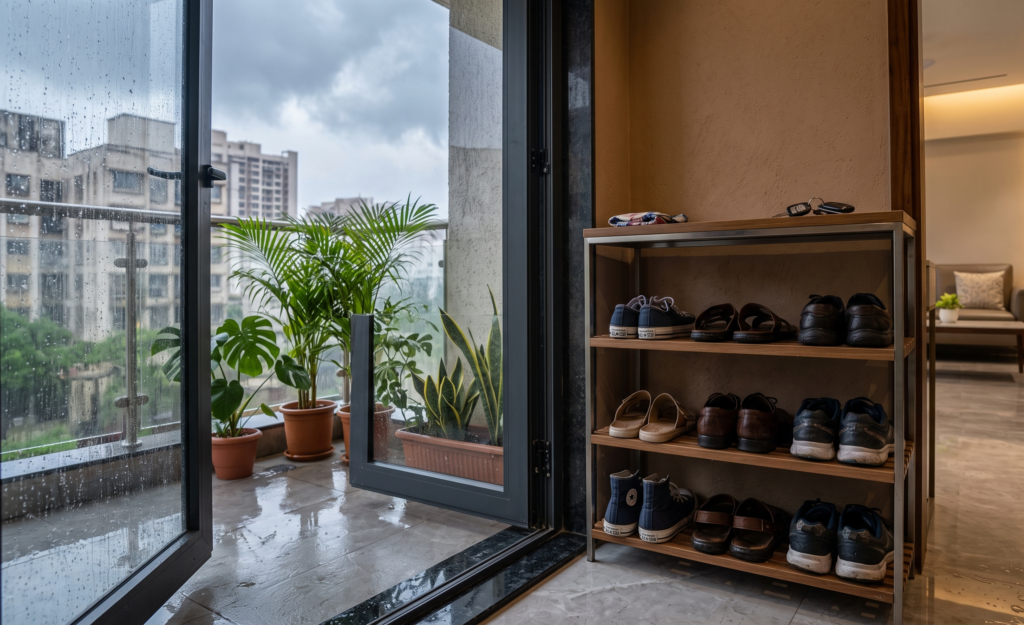
💡 Essentique Tip: Stuffing newspapers inside wet shoes can help absorb excess moisture and speed up drying.
13. Keep Emergency Lighting and Power Backup Ready
Power cuts are more common during heavy rainfall and thunderstorms. Being prepared helps you avoid inconvenience and stay safe.
Check whether your rechargeable emergency lights, flashlights, and power banks are fully charged. If your home uses an inverter or UPS, inspect the battery and ensure it’s functioning properly before the rainy season becomes more intense.
Keep emergency lighting in an easily accessible location rather than searching for it during a blackout.
✔ Quick Checklist
- Charge emergency lights.
- Test flashlights.
- Check inverter battery.
- Keep spare batteries available.
- Charge power banks regularly.
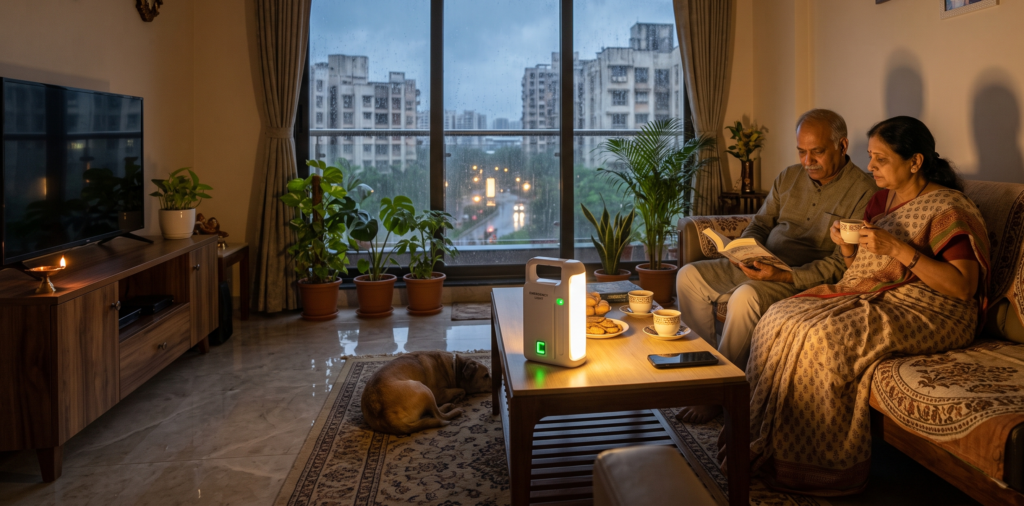
💡 Essentique Tip: A small rechargeable LED emergency light can be useful during unexpected power cuts and often consumes very little electricity.
Helpful Recommendation: A rechargeable emergency LED light with multiple brightness levels is a practical addition to every home, especially during the monsoon.
14. Check Your Water Tank and Plumbing System
Heavy rainfall can sometimes expose small plumbing issues that remain unnoticed during the rest of the year. Leaking pipes, overflowing tanks, or loose fittings can waste water and create damp areas inside the home.
Inspect visible plumbing connections, taps, and water tanks for signs of leakage. If your overhead water tank has a lid, make sure it fits securely to prevent rainwater, insects, or debris from entering.
A quick inspection today can prevent larger plumbing repairs later.
✔ Quick Checklist
- Check visible pipes.
- Inspect taps for leaks.
- Ensure water tank lids are secure.
- Look for damp areas near plumbing.
- Repair minor leaks promptly.
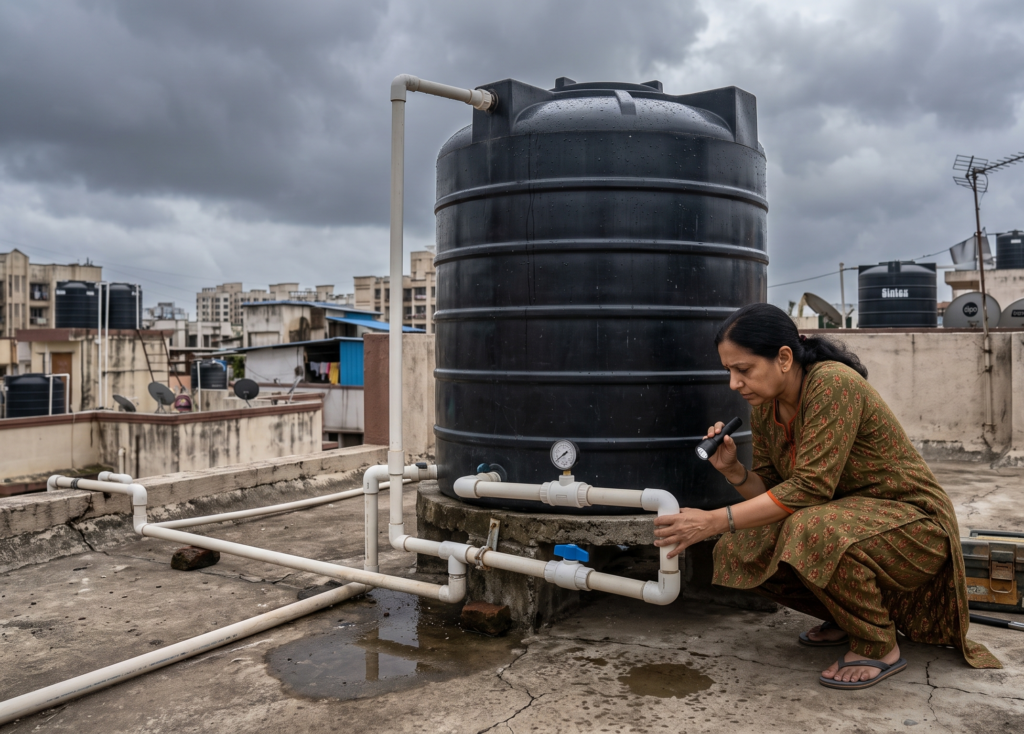
💡 Essentique Tip: Even a slow-dripping tap can waste a surprising amount of water over time. Fixing it early saves both water and money.
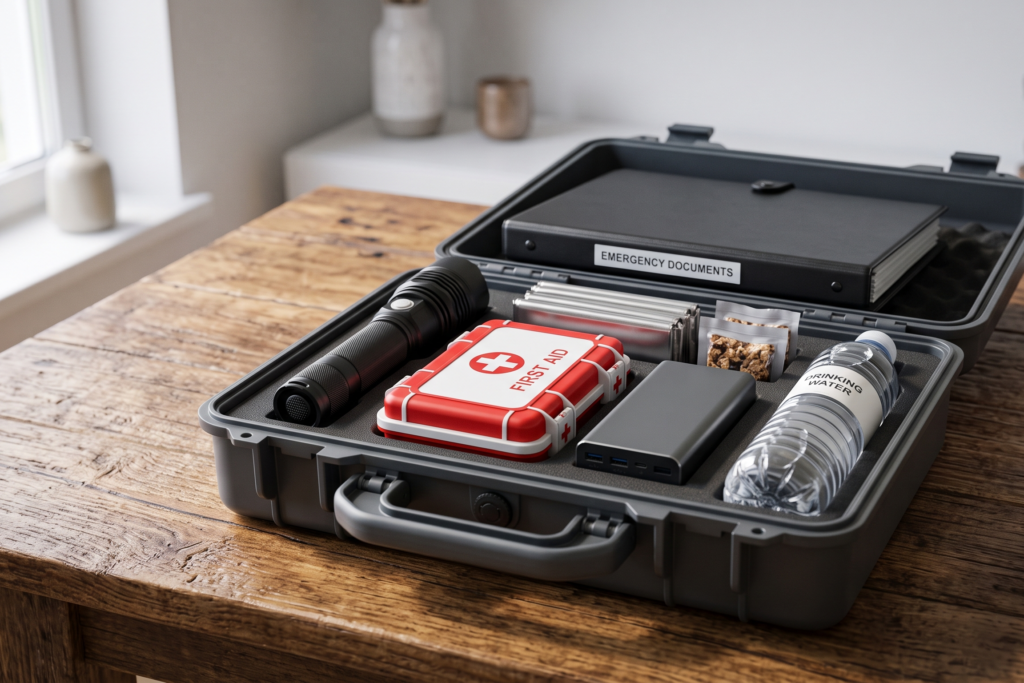
15. Prepare a Simple Monsoon Emergency Kit
Unexpected situations such as power outages, temporary flooding, or blocked roads are easier to handle when basic essentials are already available.
A small emergency kit doesn’t have to be expensive. Store important items together in a waterproof container so they’re easy to find when needed.
Include essentials such as:
- Flashlight
- Power bank
- Basic first-aid kit
- Bottled drinking water
- Battery-powered radio (optional)
- Essential medicines
- Copies of important documents in waterproof sleeves
Keeping everything in one place provides peace of mind during severe weather.
✔ Quick Checklist
- Emergency light.
- First-aid supplies.
- Charged power bank.
- Drinking water.
- Essential medicines.
- Waterproof document folder.
💡 Essentique Tip: Review your emergency kit at the start of every monsoon season and replace expired medicines or damaged supplies.
✅ Printable Monsoon Home Maintenance Checklist
Use this quick checklist before or during the rainy season:
- ☐ Inspect roof and terrace
- ☐ Seal windows and doors
- ☐ Clean drains and gutters
- ☐ Check for damp walls
- ☐ Protect wooden furniture
- ☐ Improve indoor ventilation
- ☐ Keep bathrooms dry
- ☐ Protect electrical appliances
- ☐ Remove stagnant water
- ☐ Store clothes properly
- ☐ Organise your entryway
- ☐ Dry footwear correctly
- ☐ Test emergency lights
- ☐ Inspect plumbing
- ☐ Prepare an emergency kit
Frequently Asked Questions (FAQs)
Conclusion
Preparing your home for the monsoon doesn’t require expensive renovations or professional expertise. Most problems caused by heavy rain—such as leaks, dampness, mould, electrical issues, and waterlogging—can be prevented through regular inspections and simple maintenance.
By following this checklist, you’ll not only protect your home from seasonal damage but also create a safer, cleaner, and more comfortable living environment for your family.
Instead of waiting for a problem to appear, take a few preventive steps today. A little preparation now can save you significant time, money, and stress throughout the rainy season.
💚 Essentique Weekend Challenge
This weekend, spend just 15 minutes walking through your home with this checklist.
Start at the roof or balcony, inspect your windows and drains, check one wardrobe for moisture, test your emergency light, and look for any signs of dampness.
Small actions taken today can prevent major repairs tomorrow—and that’s what smart home care is all about.